“The Trans-Siberian Railway at the Turn of the Century”: photos with a mini-story
  • Изображение
    01 / 18
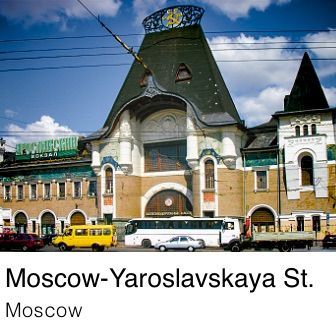
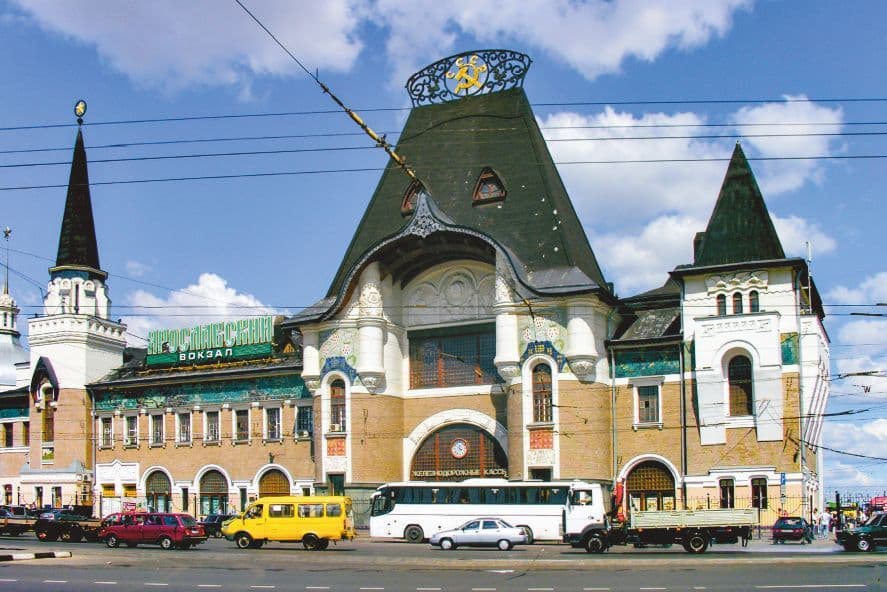
    Yaroslavsky Station on Komsomolskaya Square in the capital is the starting point for routes to Siberia and the Far East. The country’s flagship train — # 1/2 “Russia” Moscow–Vladivostok — departs from here, where you will also find a marker designating the “Trans-Siberian Railway’s Kilometer Zero.”
    The current building, in the Neo-Russian style with elements of Northern Art Nouveau, was built in 1902–1904 according to a design by Fyodor Shekhtel and decorated with additional elements during the Soviet era.
    Moscow, Moscow-Yaroslavskaya Station
    Photo: © S. Sigachev, 2004
  • Изображение
    02 / 18
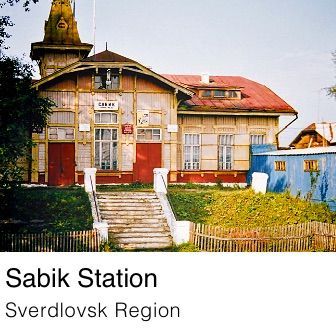
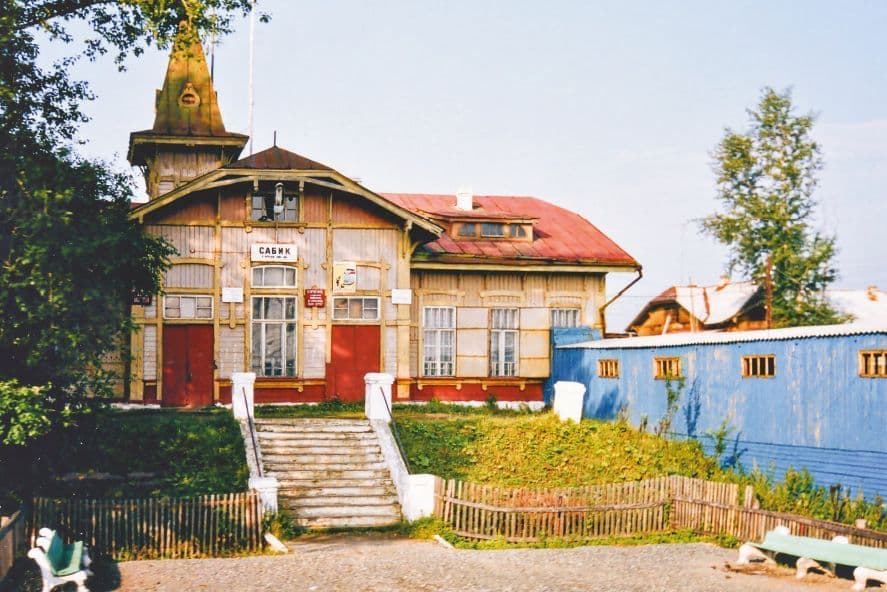
    A wooden Art Nouveau-style station at the small Ural station of Sabik (1909). This is a standard design for a Class IV station created by the young architect Feofan Vol'sov; he reflected the era of enthusiasm for Art Nouveau in the early 20th century. That is why such “terem” stations on the Perm-Yekaterinburg line are called the ‘Volsovs’.
    The station has preserved its entire complex of historic structures — the station building, the water tower, as and the boiler house.
    Sverdlovsk Region, Sabik Station
    Photo: © S. Sigachev, 2000
  • Изображение
    03 / 18
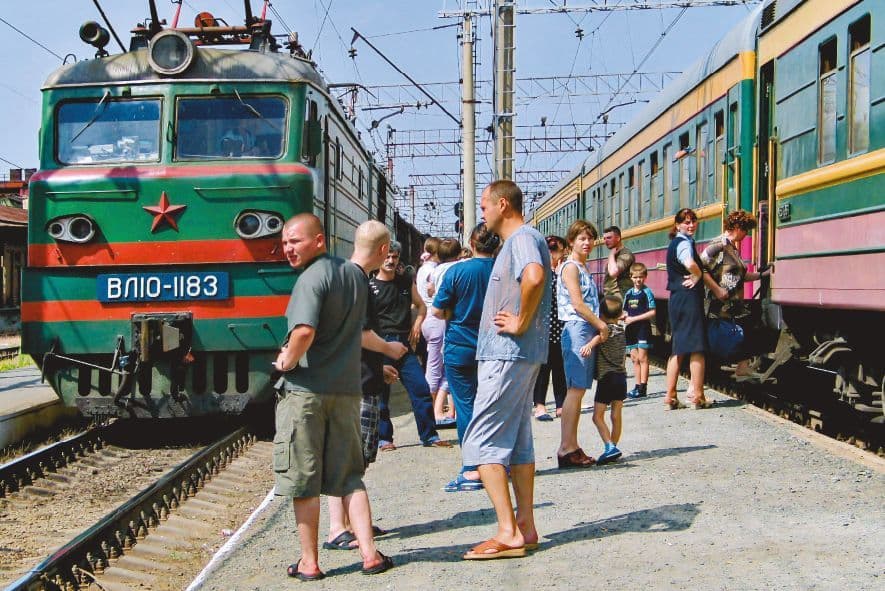
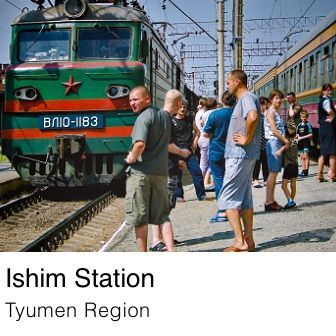
    The “Amur” express train on the Moscow–Khabarovsk route is stopped at Ishim Station. Nearby, on the adjacent track, stands a VL10 electric locomotive with a red star “on its forehead,” a feature that would later be removed from locomotives. The train cars (on the right) still have their original livery: yellow stripes on a green background and lilac-colored lower sections. Passengers are dressed for summer; the day turned out to be hot.
    Tyumen Region, Ishim Station
    Photo: © S. Sigachev, 2004
  • Изображение
    04 / 18
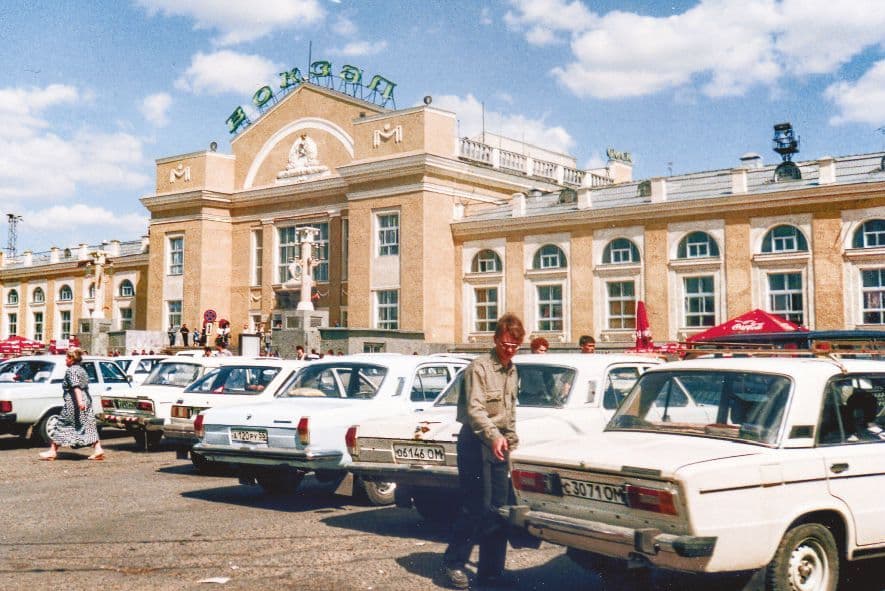
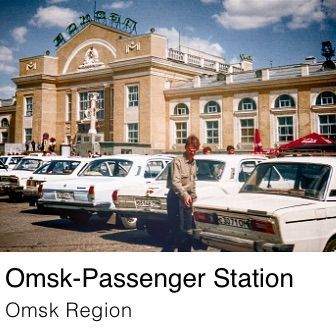
    This postcard shows the previous version of the Omsk-Pass railway station (built in 1958), which operated until 2005. In 2006, the building was completely rebuilt, so this snapshot from the early 2000s is now a thing of the past. But the car lineup in the station square tells us even more about that time: the era of foreign cars had not yet arrived in Western Siberia, and the cars are almost entirely "Volga" and "Lada" models, most of them with Soviet registration plates.
    Omsk Region, Omsk-Passenger Station
    Photo: © S. Sigachev, 2002
  • Изображение
    05 / 18
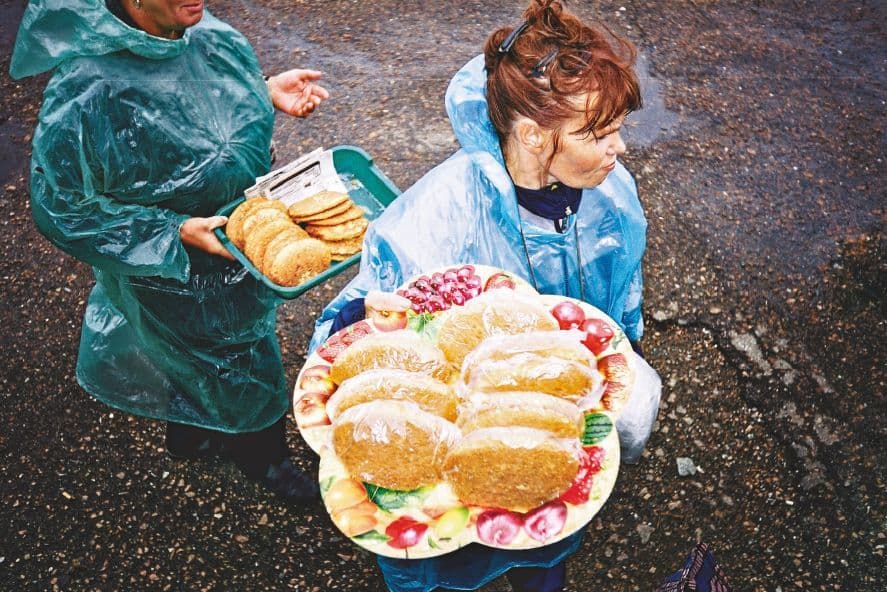
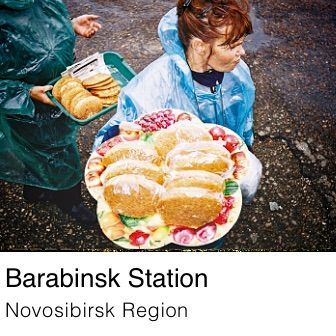
    On the West Siberian part of the Trans-Siberian Railway, there is a unique trading station called Barabinsk. The locomotive is changed here, and all trains make long stops of up to half an hour. Since Barabinsk is located in an area dotted with numerous small lakes, the local trade is dominated by fish and, for some reason, fur hats. Fish here is from the river: the sellers offer crucian carp, bream, and perch. The unique local specialty is the large flat cakes made from crucian carp roe.
    Novosibirsk Oblast, Barabinsk Station
    Photo: © S. Sigachev, 2002
  • Изображение
    06 / 18
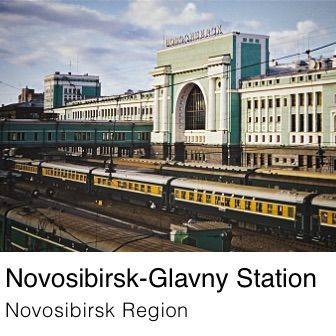
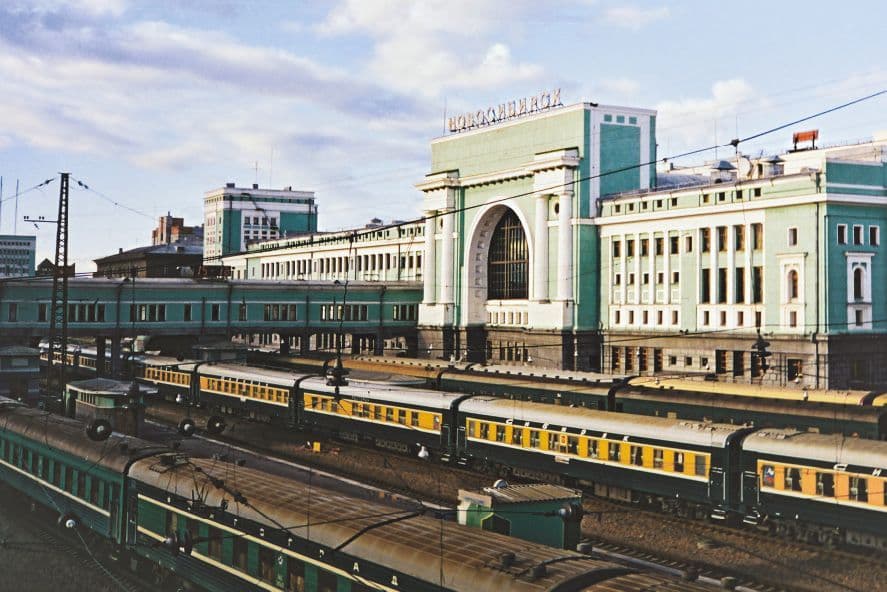
    The Novosibirsk Railway Station opened in January 1939 and became the largest railway station in the Soviet Union. It was built for the “Capital of Soviet Siberia,” a title granted to the city of Novosibirsk before the war. It covers an area of approximately 30,000 square meters and can accommodate up to 4,000 passengers at a time. The station’s interiors are truly spectacular, designed in the Art Deco style with pillars and monumental chandeliers.
    Novosibirsk Oblast. Novosibirsk-Glavny Station
    Photo: © S. Sigachev, 2002
  • Изображение
    07 / 18
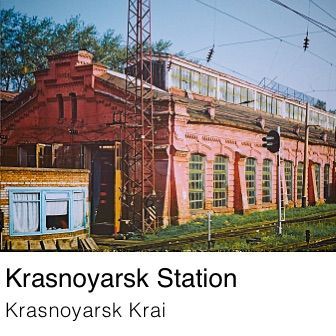
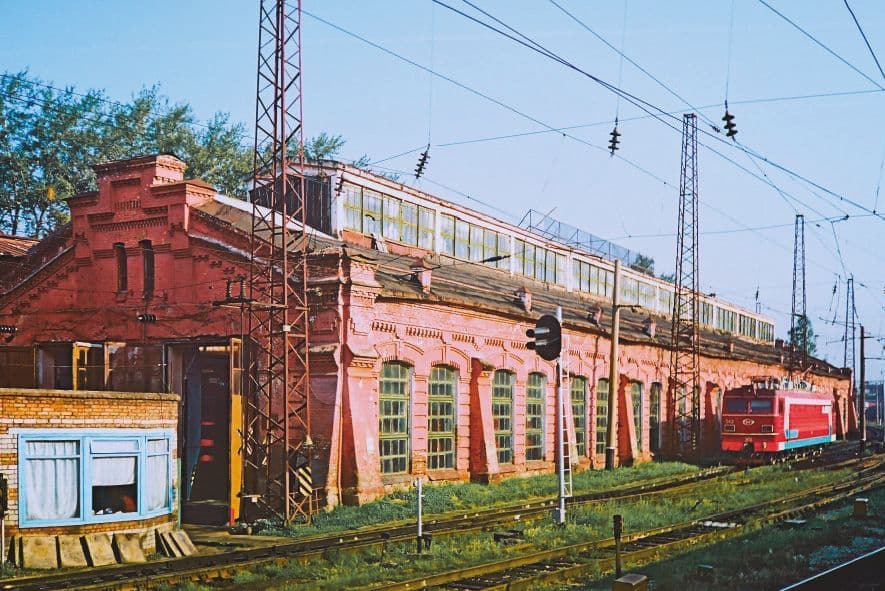
    When approaching Krasnoyarsk Station from the west, you can see an attractive building on the tracks that catches the eye from afar.
    Its red-brick style with massive buttresses reveals that the building dates back to the era of the Great Siberian Railway in the 1890s. This is the Siberian Railway’s locomotive depot; it has survived to this day and has served its intended purpose for over 120 consecutive years — only now it services electric locomotives instead of steam ones.

    Krasnoyarsk Region, Krasnoyarsk Station
    Photo: © S. Sigachev, 2002
  • Изображение
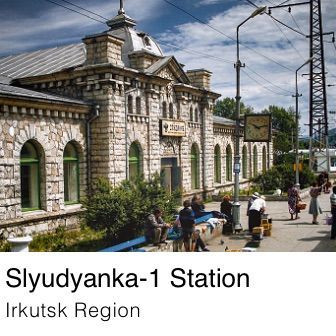
    08 / 18
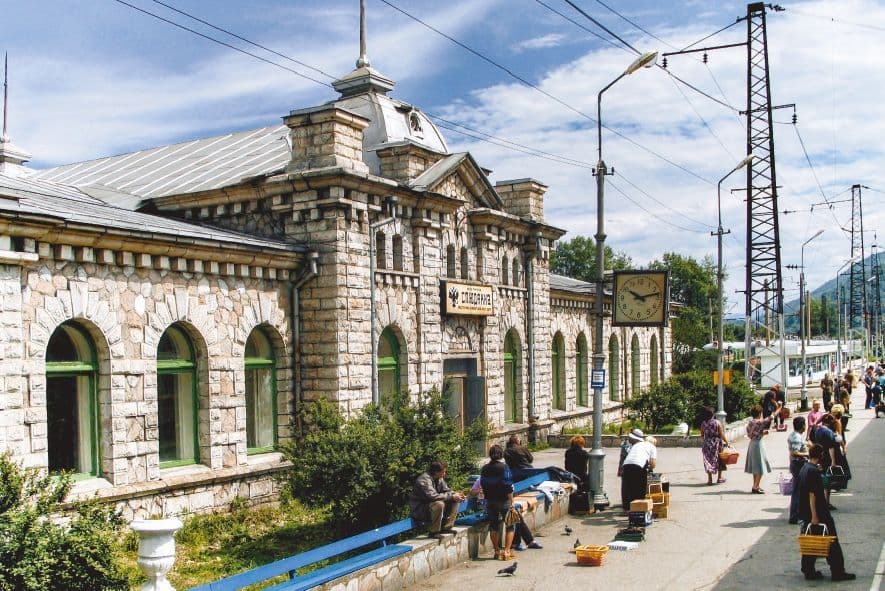
    Slyudyanka is a station on the Trans-Siberian Railway that is unique twice over. A station building made of Baikal marble was constructed here to celebrate the completion of the Circum-Baikal Railway in 1904. The roof parapet is made of openwork metal, and the symbols of a crossed anchor and axe are visible along its edges. This is the emblem of the Russian Empire’s Ministry of Railways.
    And one more thing: Until the 2010s, Slyudyanka was the “omul capital” of the Trans-Siberian Railway. There was an entire network of omul vendors here. The local trade here was very active, especially since trains used to stop here for long periods in the past.
    Irkutsk Region, Slyudyanka-1 Station
    Photo: © S. Sigachev, 2004
  • Изображение
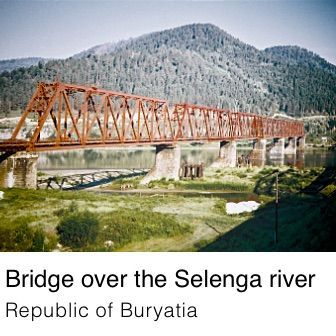
    09 / 18
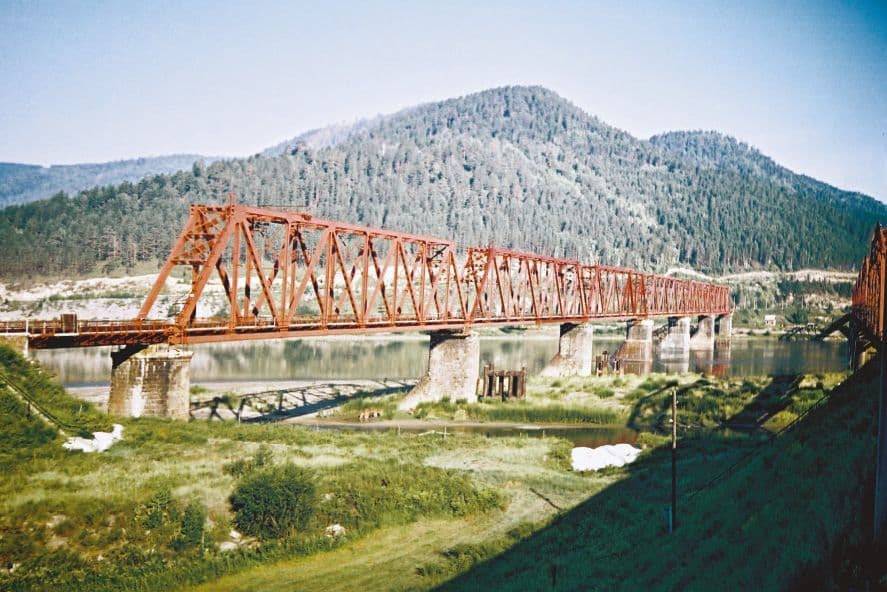
    The 577-meter-long, six-span bridge across the Selenga River was built in 1899 based on a design by Prof. N.A. Belelyubsky, and a second-track bridge was constructed in 1938. The bridge has now been reconstructed. The bridge served as the state border between the RSFSR and the Far Eastern Republic (FER) in 1920–1922.
    The Selenga River is the largest of the rivers flowing into Lake Baikal; it accounts for up to half of the annual river flow into the lake. It is 1,024 km long, with 409 km of its lower course located in Russia; the river’s source is located in Mongolia.
    Republic of Buryatia, Tataurovo–Mostovoy stretch
    Photo: © S. Sigachev, 1999
  • Изображение
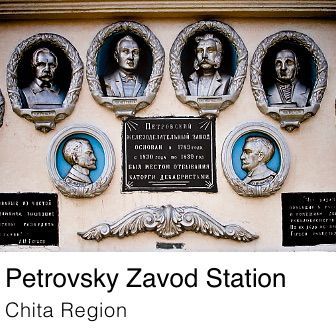
    10 / 18
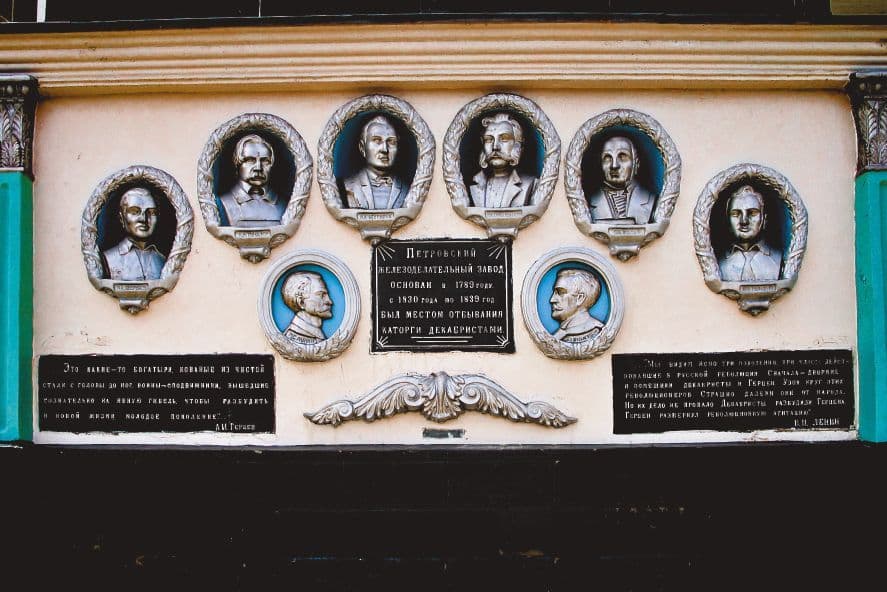
    At the Petrovsky Zavod station, passengers’ attention is drawn to bas-reliefs of the eight most famous “Decembrists” (participants in the December Uprising of 1825 — M.A. Bestuzhev, N.A. Bestuzhev, F.B. Wolf, I.I. Gorbachevsky, M.S. Lunin, A.E. Mozalevsky, N.M. Muravyov, and I.I. Pushchin). And there is a reason for this: here they served their sentences at the beginning of their terms; and here, in Petrovsk, a prison was built with a special wing for them.

    Chita Region, Petrovsky Zavod Station

    Photo: © S. Sigachev, 2000
  • Изображение
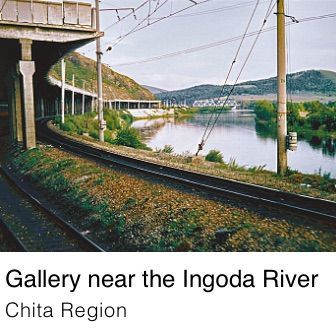
    11 / 18
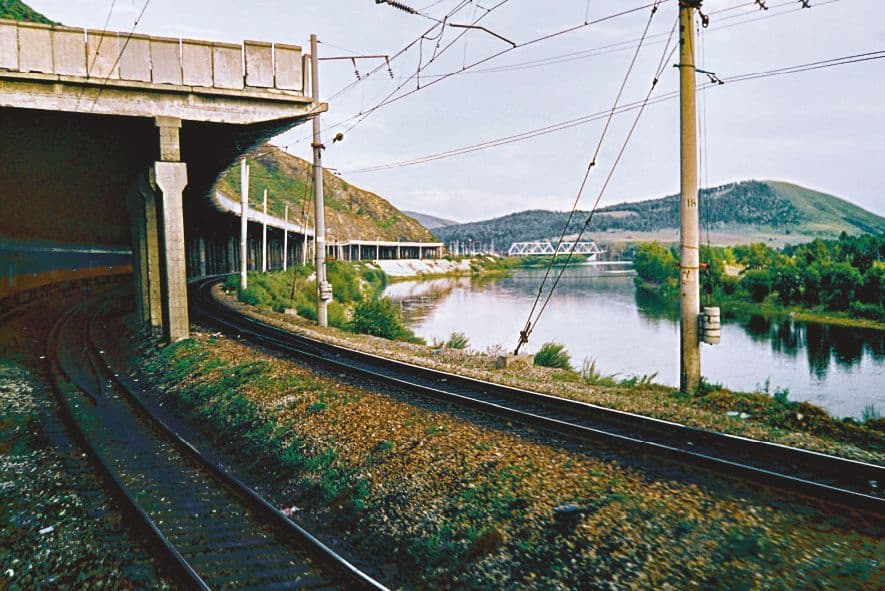
    The reinforced concrete galleries at the base of the massive, bare mountains (the highest of which is called Lukovaya) were built to protect against rockfalls along the bend of the Ingoda River — where the railway line runs particularly close to the river. When the train travels through the tunnel (and there are no supports on the river side of the tunnel), you can see the openwork bridge across the Ingoda ahead. This is the Trans-Siberian Railway branch line to China, or the former Chinese Eastern Railway.
    Chita Region, Karymskaya–Tarskaya section
    Photo: © S. Sigachev, 2004
  • Изображение
    12 / 18
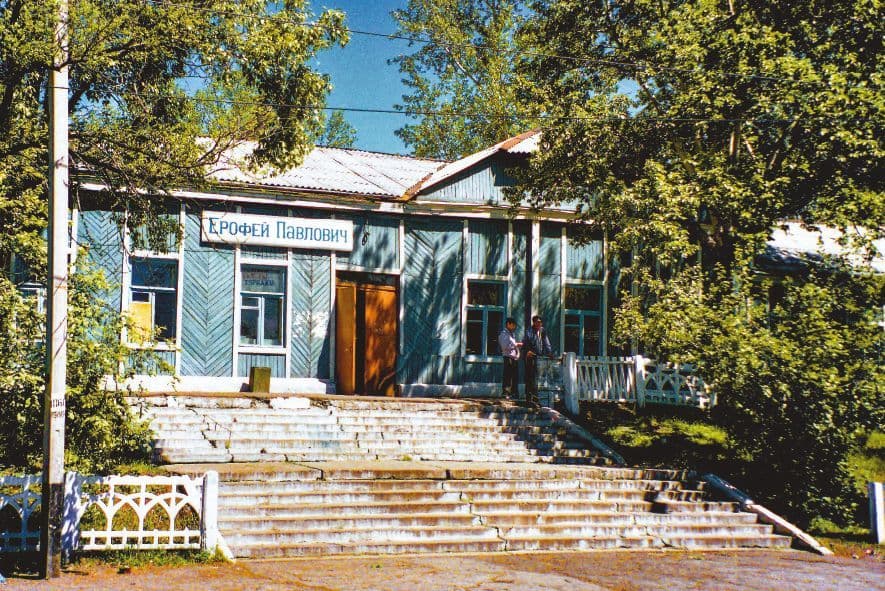
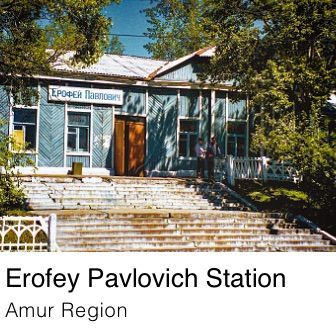
    Train crew members affectionately call this station “Yerofey” — it was named after the Russian explorer Yerofey Pavlovich Khabarov, who traveled through these lands with a band of fearless Cossacks on expeditions in the 17th century. Many people take note of this unique name. Its unusual name was also noted by the Russian writer M.M. Prishvin, who passed through here in 1931. In 2006, this cozy wooden station, shown in the photo, was demolished and replaced with a stone one.
    Amur Region, Erofey Pavlovich Station
    Photo: © S. Sigachev, 2000
  • Изображение
    13 / 18
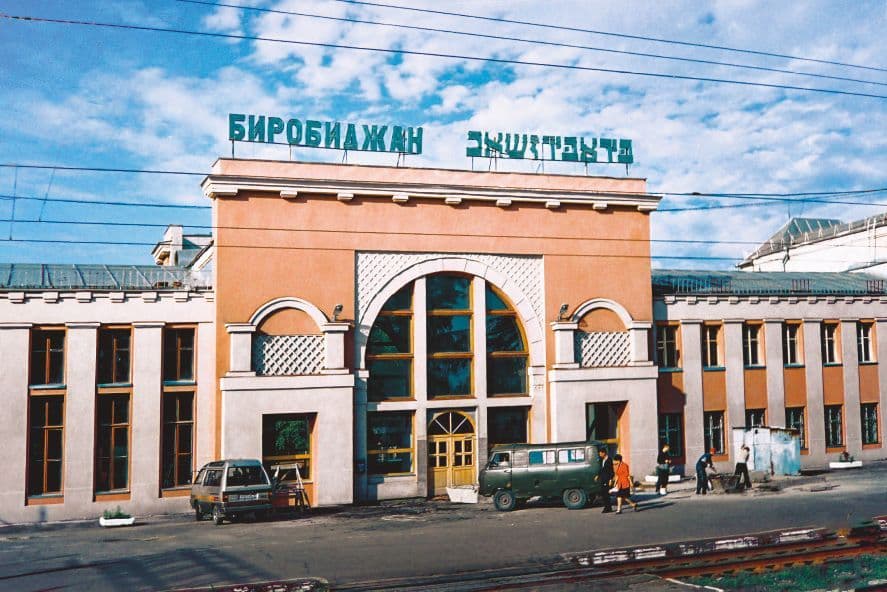
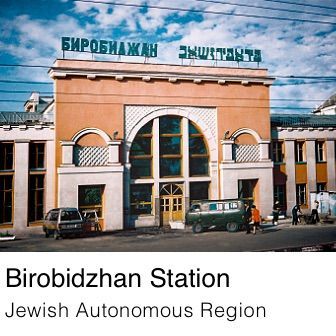
    This station used to be called Tikhonkaya, but when the Soviet Union decided in the 1930s to create a “new center for the Jewish people,” a magnificent railway station was built here (1935).
    It was designed by Swiss architect Hannes Meyer, a practitioner of the Bauhaus style, who arrived in the USSR in 1930. However, a fire broke out here in 1937, and the building’s current design, dating from the late 1940s, is simpler. The station’s name is displayed on the pediment in two languages, Russian and Yiddish.
    Jewish Autonomous Region, Birobidzhan Station
    Photo: © S. Sigachev, 2002
  • Изображение
    14 / 18
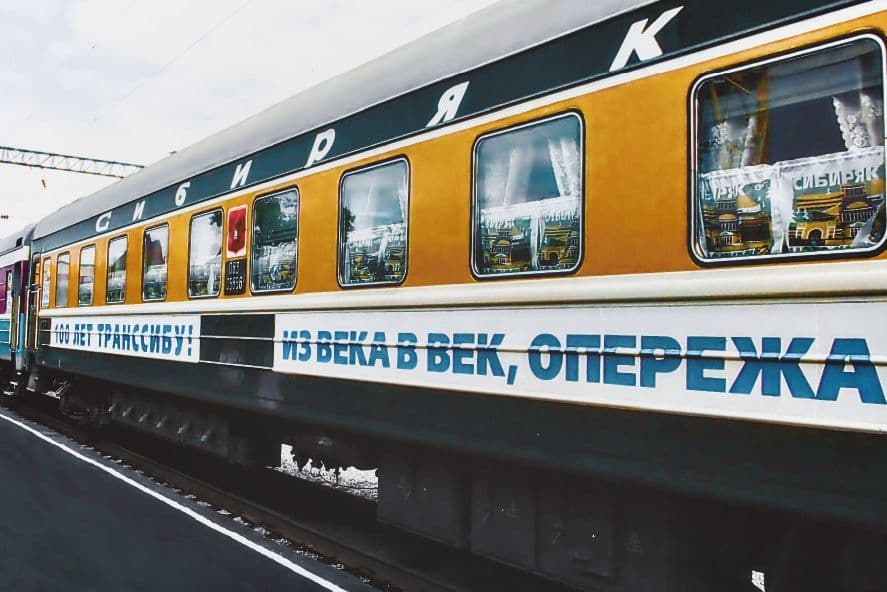
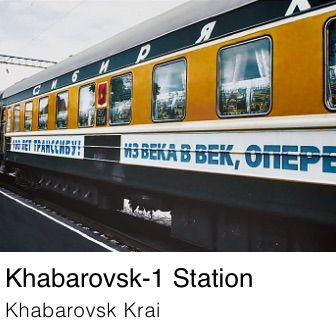
    A train car of the branded train No. 3/4 “Sibiryak” (Moscow–Novosibirsk) in its traditional yellow and green colors. Why was this train car found in faraway Khabarovsk? The answer is simple: for the 100th anniversary of the Trans-Siberian Railway, celebrated under then-Minister Aksenko in 2001, a special train was assembled, consisting entirely of cars from branded trains. And one of them was the “Sibiryak” — the flagship train of the West Siberian Railway.
    Khabarovsk Krai, Khabarovsk-1 Station
    Photo: © S. Sigachev, 2001
  • Изображение
    15 / 18
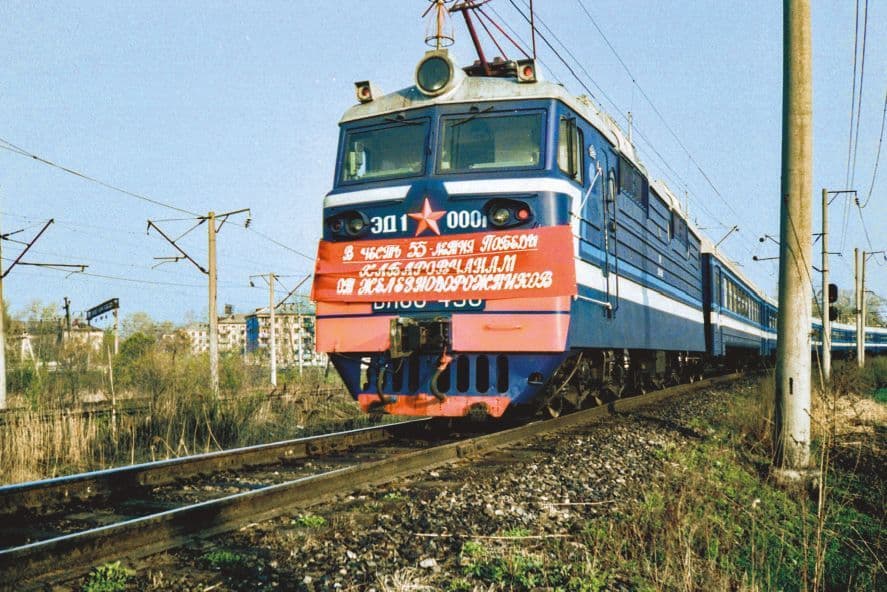
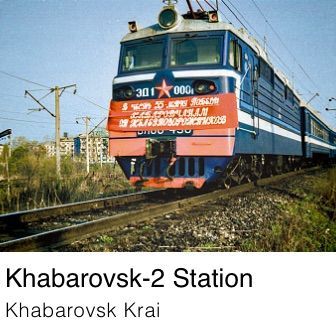
    A remarkable “hybrid” from the early 2000s — the ED1 commuter electric train, consisting of two half-electric locomotives (VL80S) coupled to both ends of the train, with standard “intermediate” cars from the ED9T electric train in the middle. Such a strange cadaver, numbered 0001, arrived in Khabarovsk to serve on suburban routes in the regional capital in the year of the 55th anniversary of Victory Day. The color is also non-standard — blue with a white stripe.
    Khabarovsk Krai, Khabarovsk-1–Khabarovsk-2 section
    Photo: © S. Sigachev, 2000
  • Изображение
    16 / 18
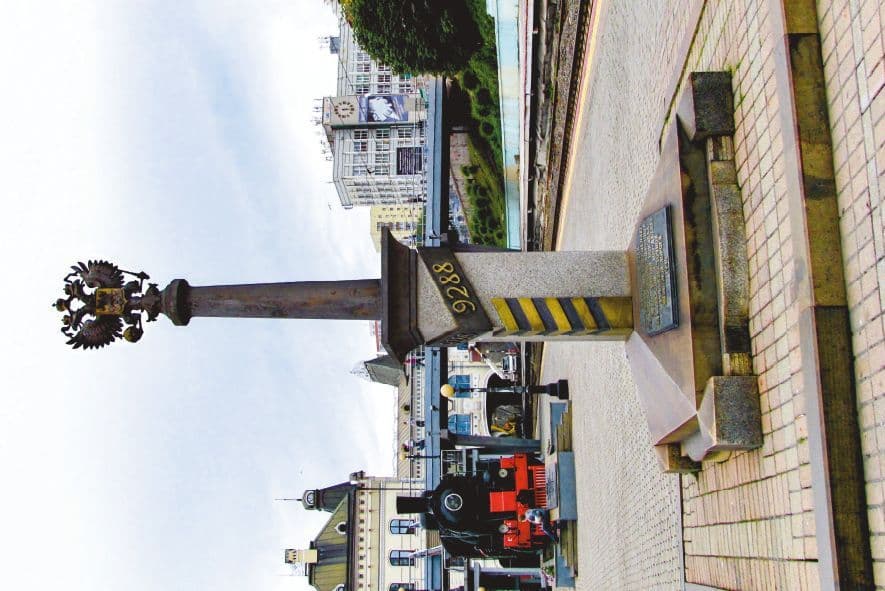
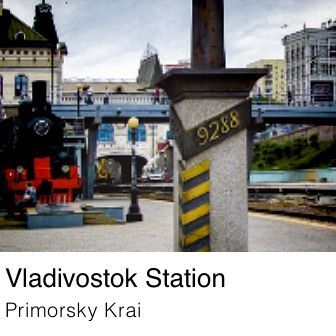
    Vladivostok is the terminus of the entire Trans-Siberian Railway; passenger trains do not go any further. That is why, here on the station platform, a commemorative stele entitled “End of the Trans-Siberian Railway” bearing the number “9288” and a double-headed eagle was erected in 1996. 9288 is the number of kilometers from Moscow along the main route of the railway. On the south side behind the monument stands the Vladivostok station, built in the “Russian” style, and a World War II-era Ea-series locomotive, brought by ship from the United States in 1943.
    Primorsky Krai, Vladivostok Station
    Photo: © S. Sigachev, 1999
  • Изображение
    17 / 18
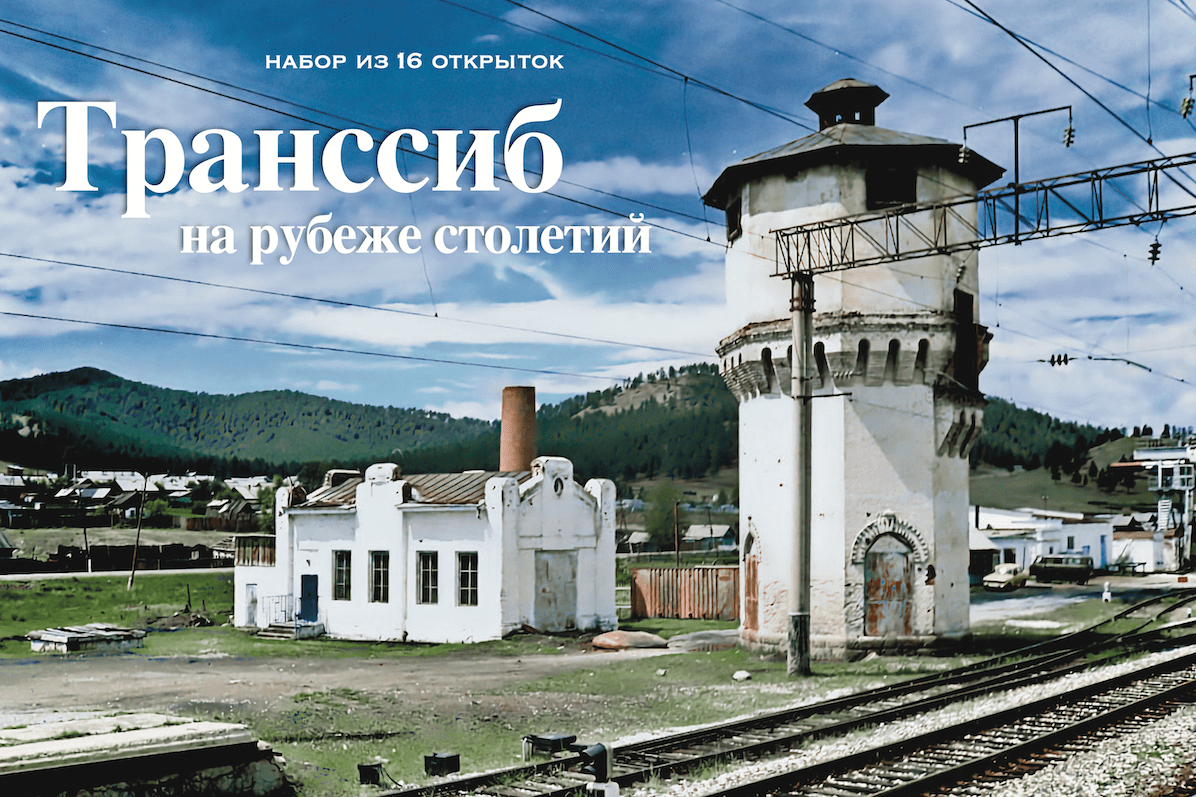
    The water supply building of the Siberian Railway (1900)
    Republic of Buryatia, Onokhoi Station.
    Photo: © S. Sigachev, 2000
  • Изображение
    18 / 18
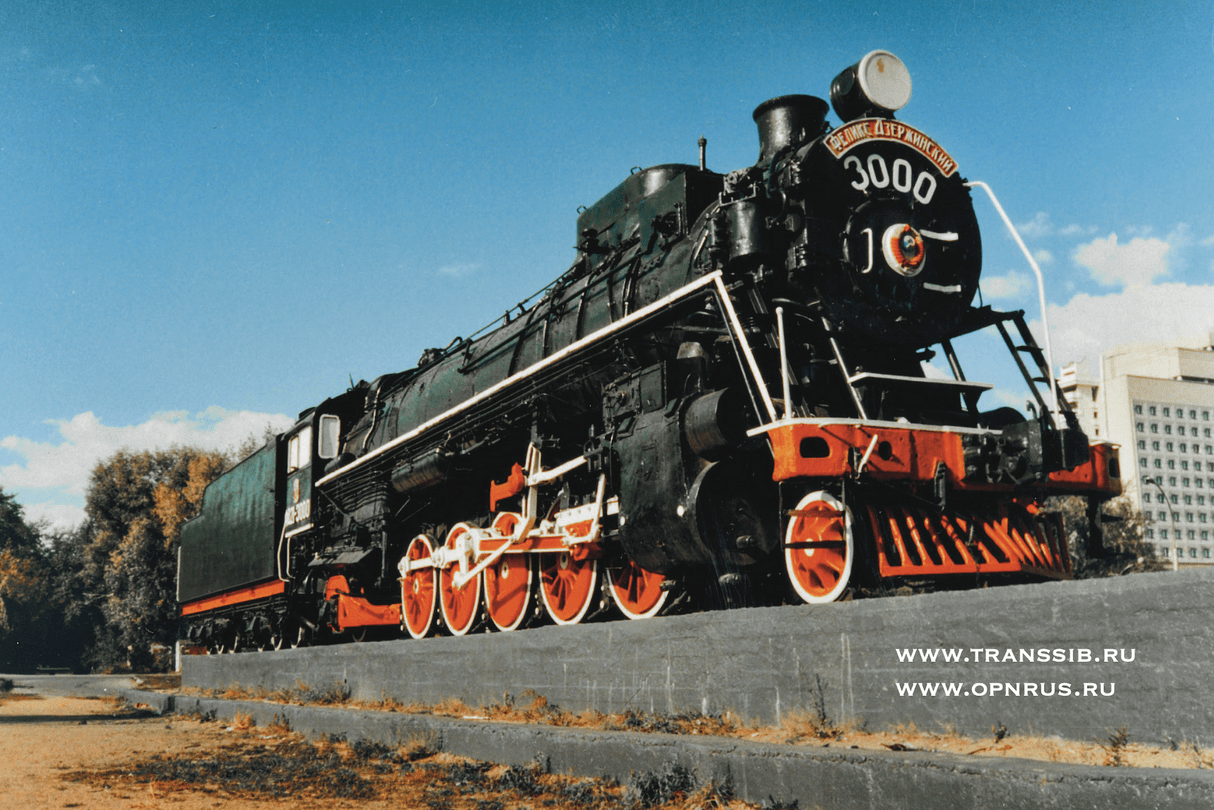
    The FD-3000 steam locomotive operated by engineer Nikolai Lunin (1940).
    Approaching Novosibirsk-Glavny Station
    Photo: © D. Boldetsov, 2001
    Buy individually
    Изображение
    30 ₽
    Изображение
    30 ₽
    Изображение
    30 ₽
    Изображение
    30 ₽
    Изображение
    30 ₽
    Изображение
    30 ₽
    Изображение
    30 ₽
    Изображение
    30 ₽
    Изображение
    30 ₽
    Изображение
    30 ₽
    Изображение
    30 ₽
    Изображение
    30 ₽
    Изображение
    30 ₽
    Изображение
    30 ₽
    Изображение
    30 ₽
    Изображение
    30 ₽